What Is Tango? The History, Music and Dance of the Rio de la Plata
目次
What Is Tango?
Tango is a music and a dance born in the late 19th century in the port cities of the Rio de la Plata: Buenos Aires in Argentina and Montevideo in Uruguay. In 2009, UNESCO inscribed it on the list of Intangible Cultural Heritage as the shared culture of both countries.
It began among immigrants. Millions of Europeans, mostly Italians and Spaniards, crossed the Atlantic and landed in tenement courtyards where their songs met African candombe rhythms and the music of the pampas. Out of that homesickness and mixture, a new music appeared: melancholic, precise, and made for two people dancing in a close embrace.
This site is written from within that world, as a living archive of tango. This page is the entrance.
The instrument: why the bandoneon
The sound most people recognize as tango is the bandoneon, a button concertina invented in Germany for church use and adopted by the port musicians of the Rio de la Plata. Its breathing, weeping voice became the genre's heart. You can explore how it works, and even play one in your browser, on our bandoneon page.
A short history in four movements
- Origins (1880s-1910s): Tango grows up in the arrabal, the poor edge of the city, and scandalizes polite society. Paris falls in love with it around 1910, and only then does Buenos Aires high society accept its own invention
- The song (1917): Carlos Gardel records "Mi Noche Triste" and turns tango into sung poetry. Gardel remains the genre's eternal voice
- The golden age (1935-1955): The era of the great orchestras. D'Arienzo's driving beat fills the dance floors, while Troilo, Di Sarli and Pugliese turn dance music into high art. Most of what you hear at a milonga today comes from these two decades
- The revolution (1955-): Astor Piazzolla breaks tango open with jazz and classical technique. His nuevo tango moves from the dance floor to the concert hall, and pieces like Libertango carry tango around the world
The dance and its codes
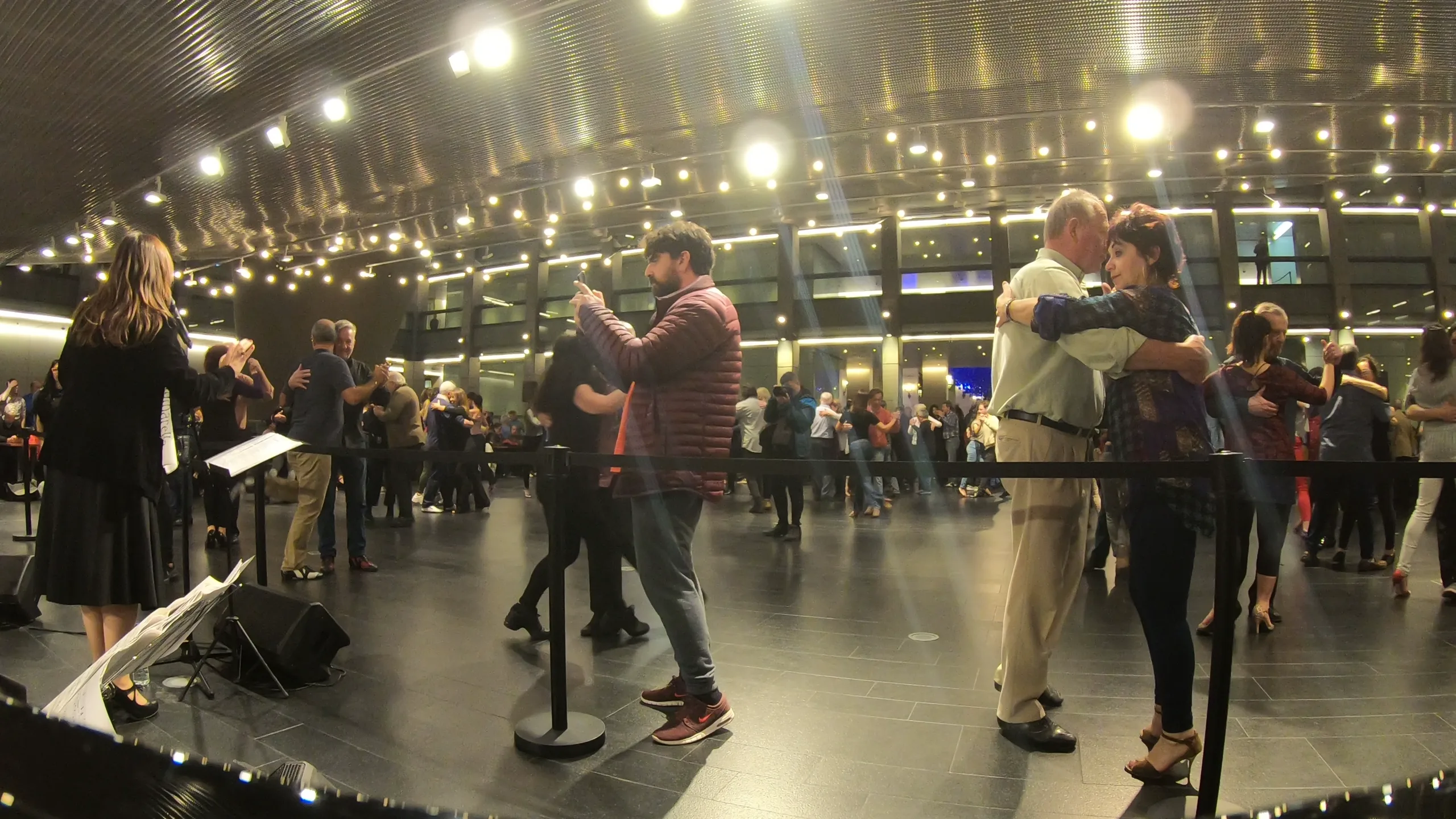
Tango is danced in an embrace, improvised step by step around the floor. It is not choreography but conversation. The social dance event is called a milonga, and it runs on unwritten rules: the tanda system of song sets, the cabeceo invitation by eye contact, and the tradition of closing the night with La Cumparsita. We explain them in Milonga etiquette.
Where tango lives today
Buenos Aires remains the capital, with milongas every night of the week, but tango is danced in Tokyo, Berlin, Istanbul and Seoul. Japan, where this site is written, has one of the oldest tango scenes outside Argentina, going back to the 1920s.
If you travel to Argentina, our daily-updated rates and prices page and our interactive map of tango history in Buenos Aires will serve you. To read tango lyrics, the Lunfardo dictionary covers the street slang the songs are written in.
How to start listening
Start with one recording from each era: Gardel singing "Por Una Cabeza" (1935), D'Arienzo's "La Cumparsita" (1937), Di Sarli's "Bahia Blanca" (1957), and Piazzolla's "Adios Nonino" (1959 onward). Those four records are a complete map of the genre.
Questions
Where was tango born?
In the port cities of the Rio de la Plata, Buenos Aires and Montevideo, in the late 19th century. UNESCO recognizes it as the shared heritage of Argentina and Uruguay.
What instrument is tango played on?
The classic tango ensemble is built around the bandoneon, a German-born button concertina, together with piano, violins and double bass. The bandoneon's breathing sound is the signature voice of the genre.
Is tango a music or a dance?
Both, inseparably. The music was made for dancing in a close embrace, and the dance is improvised to the music. A third branch, tango song, began with Carlos Gardel in 1917.
What is the most famous tango?
La Cumparsita, written in Montevideo in 1917. By tradition it is the last piece played at every milonga in the world.
Is tango difficult to learn?
The walk is simple and the depth is endless. Most beginners can dance socially within a few months of classes, and then spend a lifetime refining the embrace and the music.