From its birth to world heritage
The History of Tango
Born along the Río de la Plata in the late 19th century and spread across the world: Argentine tango. Follow its story era by era — from its birth, through the Golden Age and Piazzolla's revolution, to its inscription as world heritage.
Tango is the music and dance born in the 1880s in the port cities of Buenos Aires and Montevideo, on the Río de la Plata. The milonga and the habanera brought by immigrants mixed with the candombe of the Afro-descendant communities, and a German-born instrument, the bandoneón, gave it its voice.
It took shape in the Guardia Vieja (c. 1900–1920), became a song with Carlos Gardel in 1917, flourished in the Golden Age of the orchestras (1935–1955), was pushed toward the avant-garde by Astor Piazzolla from the late 1950s, and was inscribed as UNESCO Intangible Cultural Heritage in 2009. The eight lessons follow this order.
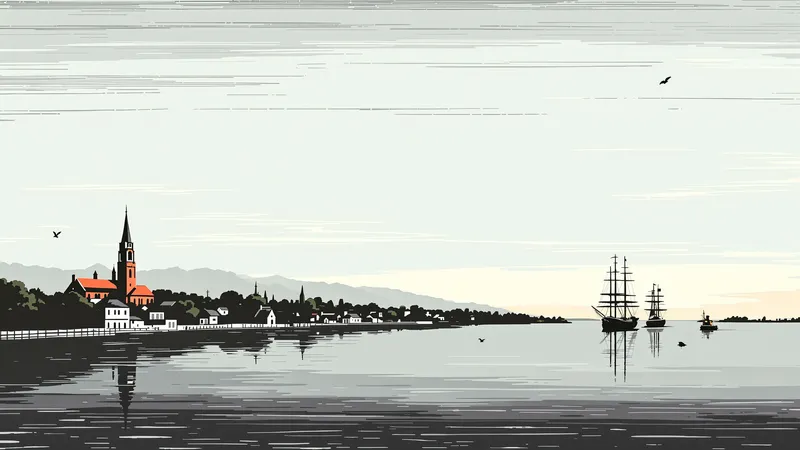 The birth of tango — the Río de la PlataWatch as a picture story →
- 01The birth of tango — the Río de la PlataPicture story, 9 scenes1880s–
- 02The bandoneón and the orquesta típicamid-19th c.–
- 03La Guardia Vieja (the Old Guard)c. 1900–1920
- 04The tango-canción is born — Gardel1917
- 05La Guardia Nueva — De Caro's refinement1920s
- 06The Golden Age (Época de Oro)1935–1955
- 07Piazzolla and the avant-garde — Nuevo Tangolate 1950s–
- 08Tango today, and world heritagetoday