Milonga Etiquette: The Unwritten Rules of the Tango Floor
目次
Milonga etiquette: the unwritten rules
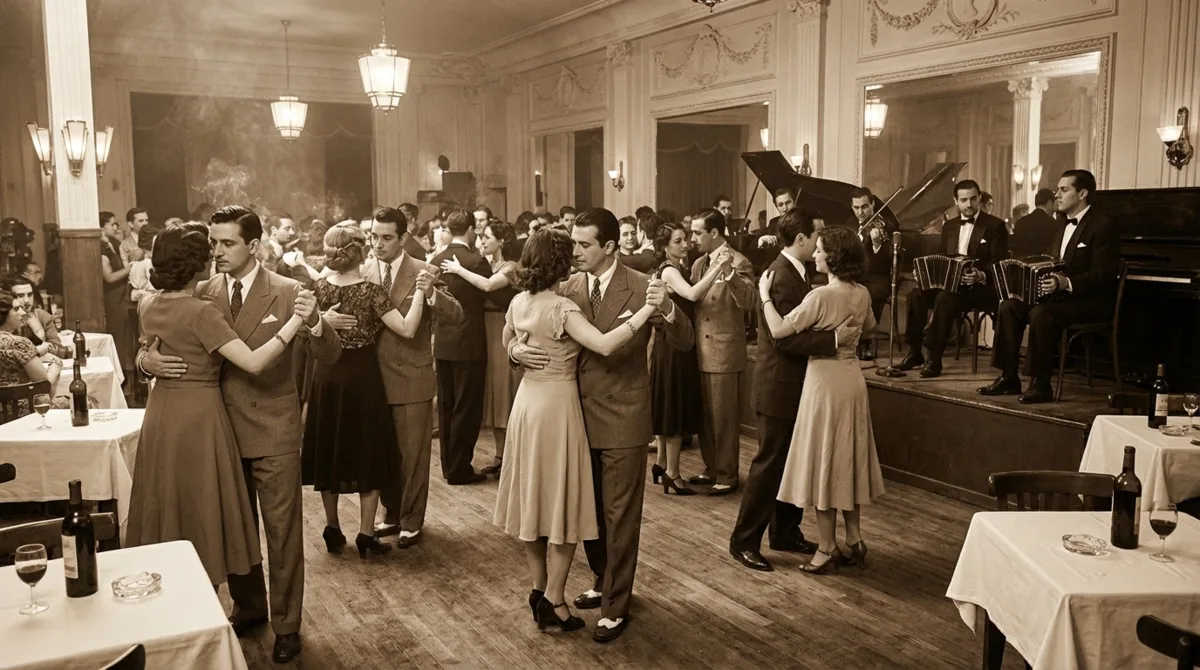
A milonga is a social tango dance night. The word also names a faster, older musical style, but when a dancer says "I'm going to a milonga", they mean the event. Milongas run every night in Buenos Aires and in hundreds of cities worldwide, and they all run on the same unwritten rules, called the codigos.
The codes are not snobbery. They exist so that strangers can share a crowded floor, in an embrace, without a single word. Learn them and any milonga on Earth will open to you.
The invitation: cabeceo and mirada
Nobody walks across the room to ask for a dance. Invitations happen by eye contact: the mirada (the look) and the cabeceo (the nod). You catch someone's gaze across the floor; if they hold it, you nod toward the floor; if they nod back, the dance is agreed. If they look away, no one has been refused in public, and no one is embarrassed.
For beginners this feels strange for exactly one evening. Then you realize it is the most civilized invitation system ever devised.
Tandas and cortinas: the structure of the night
Music at a milonga comes in tandas, sets of three or four songs by the same orchestra in the same style, separated by a cortina, a short burst of non-tango music. The contract is simple: you dance the whole tanda with the same partner, and the cortina is when you thank them and return to your seat.
Thanking someone with "gracias" in the middle of a tanda is the polite way to end early, and it is understood as exactly that. Do not say gracias after a dance you enjoyed until the tanda ends.
The ronda: traffic rules of the floor
Couples move counterclockwise around the floor in lanes, like slow traffic. The leader's duties: keep moving with the flow, never overtake through the middle, protect your partner from collisions, and enter the floor only after making eye contact with the oncoming leader. Show-style kicks and big moves belong to the stage, not to a crowded ronda.
The last dance: La Cumparsita
Every milonga in the world ends the same way: with La Cumparsita. When those first notes sound, it is the final tanda of the night. Dancers keep it for a partner who mattered that evening. If you are learning what tango is, this ritual is the purest demonstration: a hundred people, one melody, one shared goodbye.
Practical notes for your first milonga
- What to wear: neat and comfortable. Buenos Aires milongas range from elegant salons to jeans-and-sneakers halls; check the venue. Dance shoes with suede soles help, but clean street shoes are fine for a first visit
- Where to sit: seating is often assigned by the host; let them place you. Your seat is your base for the cabeceo
- If you do not dance yet: going just to watch and listen is completely normal. Order a glass of wine and study the ronda
- In Buenos Aires: our interactive map marks the tango landmarks of the city, and the rates page keeps your travel budget honest
Questions
What is a milonga?
A social tango dance night. The same word also names a faster musical style that predates tango. Milongas run on shared unwritten codes, so the experience is remarkably similar in Buenos Aires, Tokyo or Berlin.
What is a cabeceo?
The traditional invitation by eye contact and a nod, agreed across the room before anyone stands up. It protects everyone from public refusals and is still the standard in traditional milongas.
What is a tanda?
A set of three or four songs by the same orchestra, danced with the same partner. Tandas are separated by cortinas, short non-tango interludes for changing partners.
Can beginners go to a milonga?
Yes. Going to watch is normal, and many milongas begin with a beginners' class. Learn the basic codes, respect the ronda, and the room will treat you kindly.
Why does every milonga end with La Cumparsita?
It is the worldwide tradition for announcing the final tanda. When La Cumparsita plays, you dance the last dance of the night.