Is Buenos Aires Safe? A Neighbourhood by Neighbourhood Answer
目次
- What actually happens
- Phone snatching
- Bag lifting in restaurants
- Distraction at ATMs and in crowds
- Neighbourhood by neighbourhood
- Recoleta
- Palermo
- San Telmo
- Microcentro
- Puerto Madero
- La Boca
- Retiro
- Constitución
- Check any address yourself
- Practical rules that actually work
- Do not walk with your phone in your hand
- Keep bags in your lap or between your feet
- Take a car after dark
- Carry the cash you need and no more
- Do not resist
- Is the Subte safe
- Is it safe for women travelling alone
- Is Argentina safe to travel to right now
- Frequently asked questions
- Related
Buenos Aires is not a city where visitors are attacked. It is a city where visitors are robbed, and almost always without violence.
That distinction matters, because it changes what you should do. The answer to "is it safe" is not yes or no. It depends on the block you are standing on, the hour, and whether your phone is in your hand.
What actually happens
The overwhelming majority of incidents involving visitors are theft of phones and bags. Three patterns cover most of it.
Phone snatching
Someone on a motorbike or on foot takes the phone out of your hand as they pass. This happens on wide avenues, at traffic lights, and outside cafés with pavement tables. It takes under two seconds.
Bag lifting in restaurants
A bag hung on the back of a chair or placed on the floor. Someone sits at the next table, waits, and leaves with it. Nobody sees anything.
Distraction at ATMs and in crowds
Someone points out a stain on your jacket, or drops coins near you. While you look down, a second person takes what you put down.
Violent robbery exists but is rare in the areas visitors use. What is common is opportunistic, quiet and quick.
Neighbourhood by neighbourhood
This is what people ask most, so here is the direct version.
Recoleta
Recoleta is the easiest area to walk. Wide tree-lined streets, people out at night, embassies and museums. If it is your first visit and you want to think about safety as little as possible, stay here.
Palermo
Palermo is large and varies within itself. Palermo Soho and Palermo Hollywood are busy until late and generally comfortable. The further you go from the restaurant streets, the quieter it gets, and quiet is what to watch for.
San Telmo
San Telmo has the best atmosphere in the city and the most uneven safety. The Sunday fair is packed and fine. Some side streets empty out completely after dark. If you stay here, choose accommodation on a main street.
Microcentro
Microcentro is the business district. Full at midday on weekdays, deserted at night and at weekends. Cheap to stay in, but not a good place to be at 22:00 on a Sunday.
Puerto Madero
Puerto Madero is the newest area, on the water. Statistically the safest part of the city, and also the furthest from ordinary life.
La Boca
La Boca requires care. The painted street of Caminito and the few blocks around it are fine during the day and heavily policed. Walk more than two or three blocks in the wrong direction and the character changes sharply. Do not go at night.
Retiro
Retiro contains the main bus terminal and, immediately behind it, an area that visitors should not walk through. Arrive and leave by taxi.
Constitución
Constitución is the same situation around the southern train station.
Check any address yourself
Rather than trusting a list, you can look at the city's own figures.
Our map includes a Safety layer built from Buenos Aires city open data, showing recorded robbery and theft by area. It is the government's own count, not an impression. You can put in the address of a hotel or a restaurant and see what the surrounding blocks look like.
The same map shows every bus moving in real time and the six Subte lines, which matters here: knowing your bus is four minutes away is the difference between waiting inside a café and standing on a dark corner.
Practical rules that actually work
Do not walk with your phone in your hand
This one habit removes most of the risk. If you need to check a map, step into a shop doorway or a café. If you rely on your phone for everything, carry a second cheap one, or at least a printed address for your accommodation.
Keep bags in your lap or between your feet
Never on a chair back, never on the floor beside you. This is the difference between eating a meal and losing a passport.
Take a car after dark
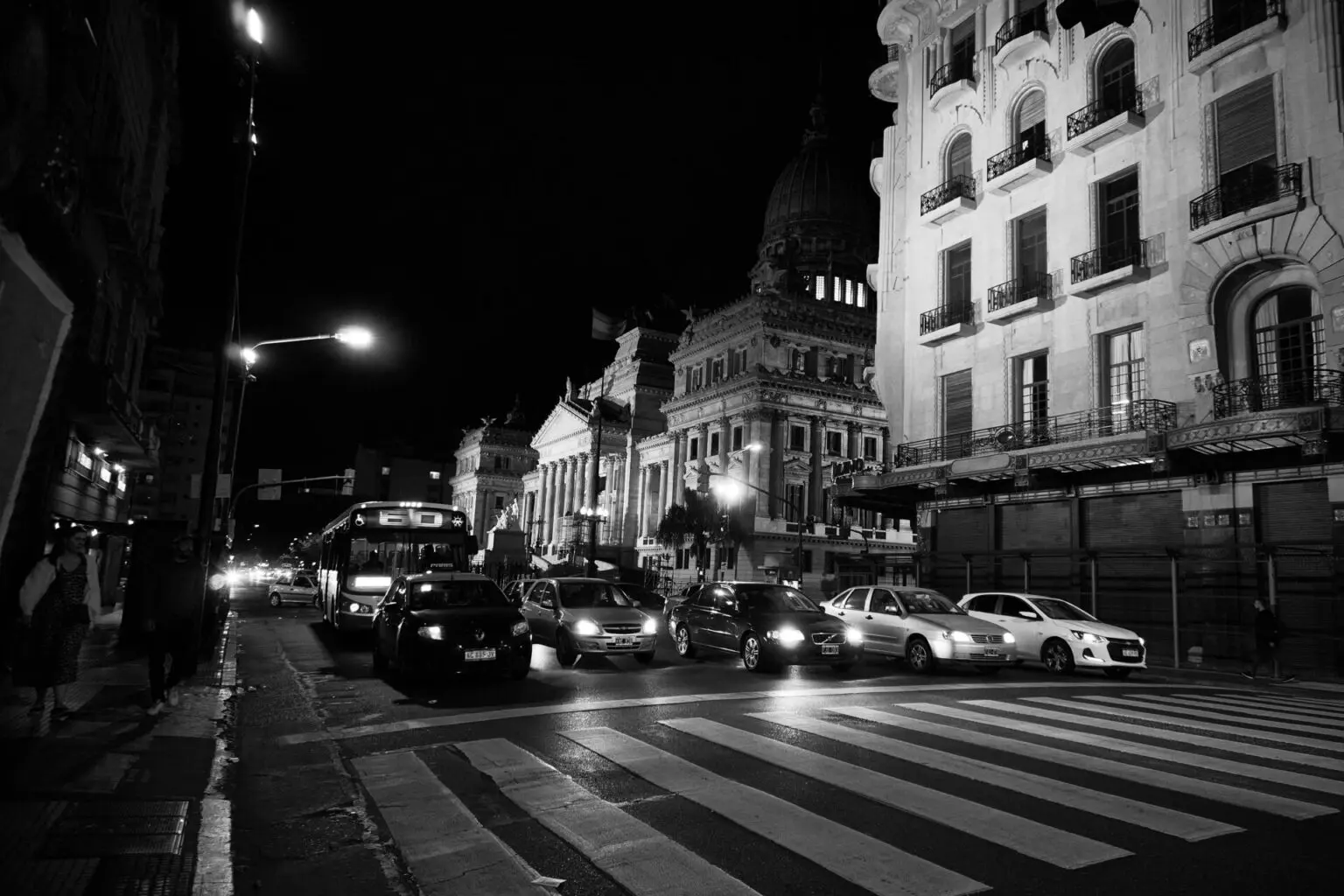
Between roughly 23:00 and 06:00, use a registered taxi or an app rather than walking, even for short distances. The cost of a ride across the centre is small.
If you are waiting for a bus, check our live map first so you know how many minutes are left. Waiting inside a shop for eight minutes is a different situation from standing at the stop for eight minutes.
Carry the cash you need and no more
Leave the rest, plus your passport, in the accommodation. A photo of the passport on your phone is enough for daily use.
Do not resist
If someone takes your phone, let it go. Nothing on it is worth an injury.
Is the Subte safe
Yes, during operating hours. It is used by everyone and stations are staffed.
The usual care applies: phone away on the platform, bag in front of you in a crowded carriage. Late in the evening, carriages thin out, and at that point a taxi is the better choice.
Is it safe for women travelling alone
Broadly yes, with the same precautions that apply anywhere in a large Latin American city.
Street comments happen. They are usually verbal and not followed up. Ignoring them and continuing to walk is the normal local response.
At night, take a car rather than walk, even for short distances. This is what local women do, and it is worth copying.
Is Argentina safe to travel to right now
Yes. There is no armed conflict, no travel warning against the country as a whole, and the tourist areas function normally.
The economic situation produces headlines that sound alarming from the outside. Inflation and protests are part of daily life here and do not translate into danger for visitors. Demonstrations are frequent, announced in advance, concentrated around the Plaza de Mayo and Congreso, and easy to avoid by walking a few blocks away.
Frequently asked questions
Is Buenos Aires safe for tourists?
Yes, with normal precautions. The main risk is theft of phones and bags, not violence. The single most effective habit is not walking with your phone in your hand.
Which neighbourhoods are safest?
Recoleta and Puerto Madero are the easiest to walk. Palermo is generally comfortable near the restaurant streets. Retiro behind the bus terminal, Constitución and most of La Boca require care.
Is La Boca safe?
The Caminito street and the immediate blocks around it are fine during the day and policed. A few blocks in the wrong direction the character changes sharply. Do not go after dark.
Is San Telmo safe?
The Sunday fair and the main streets are fine. Some side streets empty out completely at night. If staying here, choose accommodation on a main street.
Is the Subte safe?
Yes during operating hours. Keep your phone away on the platform and your bag in front of you in a crowded carriage. Late in the evening a taxi is the better choice.
Is Buenos Aires safe at night?
In busy areas with people around, yes. The rule that matters is to travel by car rather than walk between roughly 23:00 and 06:00, even for short distances.
Are taxis safe in Buenos Aires?
Registered taxis and app-based cars are the normal way to move at night. Avoid unmarked cars offering rides, particularly outside the airport and bus terminal.
How can I check whether a specific address is in a risky area?
Our map has a Safety layer built from the city government's own crime data. You can look up any address and see the recorded robbery and theft in the surrounding blocks.